
Many accident victims feel lost about what happens after a serious crash beyond calling 911 and getting medical care. When you’re hurt and facing mounting bills while unable to work, the legal process can feel like another overwhelming burden. The insurance calls start coming, medical records pile up, and you’re left wondering if you’re making the right choices for your family’s future.
But here’s what most people don’t realize: personal injury cases in Washington State follow a predictable path from medical treatment through investigation, negotiations, and sometimes litigation. Understanding these steps can help you make informed decisions about your health and finances. While Washington’s plazo de prescripción de tres años provides legal protection, acting promptly helps preserve evidence and strengthen your case. Contact Russell y Hill today for a free consultation to discover how our no-win, no-fee approach can handle the legal complexities while you focus on healing.

Understanding the Washington Personal Injury Lawsuit Process
When you’re hurt and worried about bills piling up, the legal side of recovery can feel confusing. The personal injury lawsuit process Washington State follows three predictable steps: understanding your legal deadlines, navigating insurance negotiations, and building your case through medical documentation. Most injured people never see the inside of a courtroom, but knowing what could happen helps you make informed decisions about your recovery and compensation.
Washington’s Three-Year Deadline (But Don’t Wait That Long)
Washington law gives you tres años from your injury date to file a lawsuit. While that sounds like plenty of time, waiting hurts your case. Witnesses forget details, evidence disappears, and insurance companies become less willing to negotiate fairly. Starting your claim within 30 days of your accident preserves crucial evidence and demonstrates the strength of your case to insurance adjusters.
Most Cases Settle Without Going to Court
Filing a lawsuit doesn’t mean you’re heading to trial. The vast majority of personal injury cases settle through insurance negotiations before reaching a courtroom. The lawsuit itself becomes leverage that encourages fair settlement offers. Your abogado de lesiones personales uses this process to gather evidence, take depositions, and build pressure for a reasonable resolution. Dealing with insurance companies becomes much easier when they know you have strong legal representation.
Your Medical Records Tell Your Story
Consistent medical treatment and thorough documentation directly determine your case value. Insurance adjusters look for gaps in care or incomplete records to reduce settlements. Following your doctor’s treatment plan creates the foundation for maximum compensation. Attending all appointments and keeping detailed records of your pain and limitations strengthens your case. Your medical story becomes the strongest evidence of how the accident changed your life.
The Key Steps Involved in a Personal Injury Lawsuit
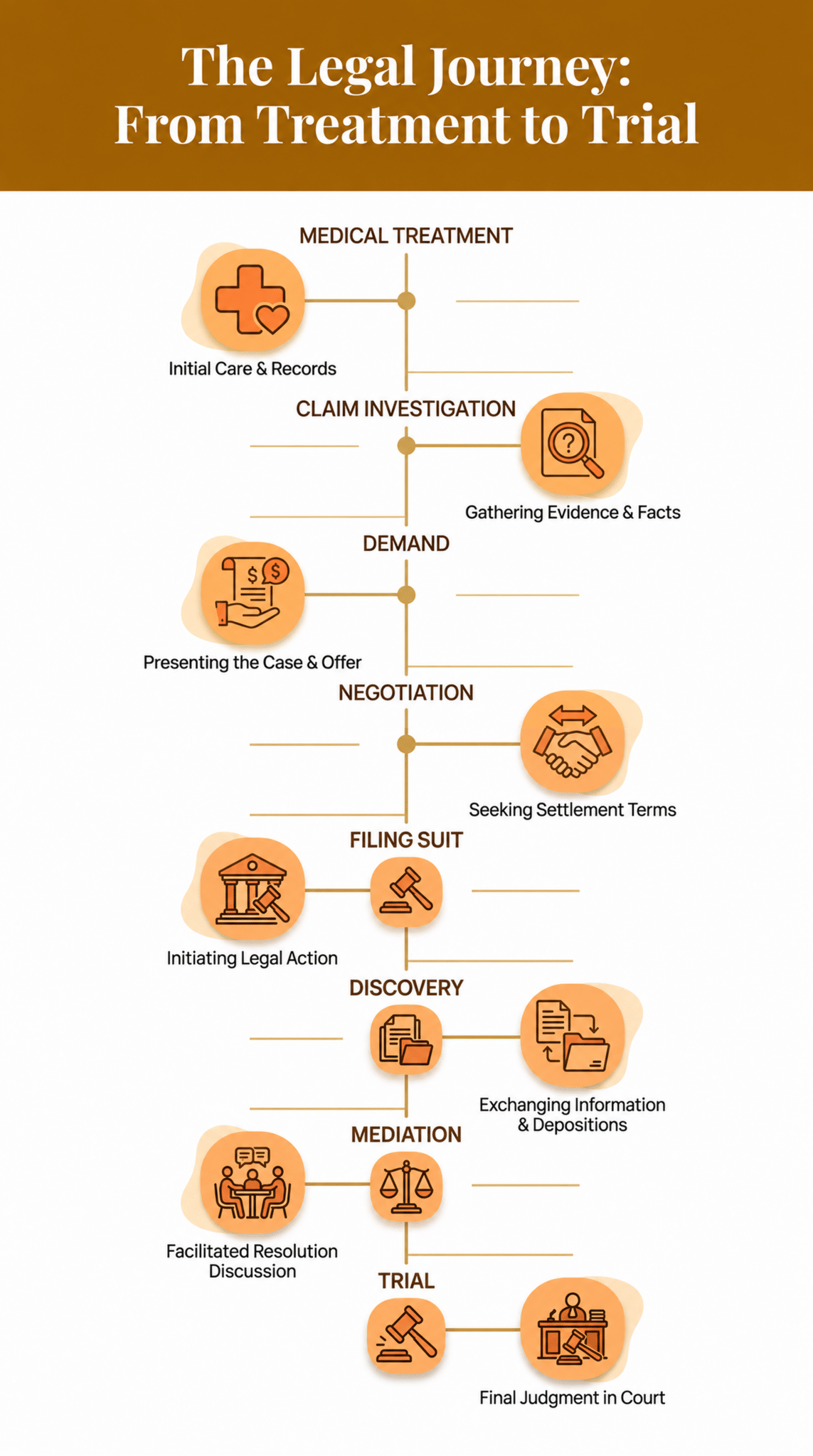
When you’re hurt and worried about bills piling up, knowing the steps involved in a personal injury lawsuit can help you feel more in control. Each phase has specific actions we’ll guide you through to protect your case and your family’s future.
- Get medical care and preserve evidence immediately – Seek treatment right away, take photos of injuries and the accident scene, collect witness contact information, and save all medical records and bills in one place.
- Report the incident but refuse recorded statements – File police reports or notify property owners about the accident, but refuse to give recorded statements to insurance companies until we can protect your rights during these conversations.
- Build your case with professional investigation – We’ll gather evidence, collect your medical records, calculate all damages including lost wages and future treatment costs, then send a formal demand letter to start settlement negotiations.
- File a lawsuit when needed for maximum leverage – If insurance companies won’t offer fair compensation, we’ll file within Washington’s three-year deadline to create serious negotiation pressure while preserving your right to trial.
- Navigate discovery with experienced support – We’ll exchange evidence with the other side, prepare you for depositions where you’ll answer questions with our guidance, attend mediation sessions to negotiate settlements, and prepare for trial if necessary to get you the compensation you deserve.
How Long a Personal Injury Lawsuit Takes—And What Can Speed It Up
If you’re wondering how long a personal injury lawsuit takes, the answer depends on your specific situation. Straightforward cases with clear liability often settle within months after your medical treatment ends. Cases that go to court typically take 12 to 24 months to resolve, with federal courts reporting a median time of 13.7 months for civil cases (while most personal injury cases are handled in state courts, federal data shows similar patterns). Washington Superior Courts follow scheduling rules that aim to resolve most cases within 12 months of filing.
Several factors influence these timelines. The biggest delays come from ongoing medical treatment, disputed liability, missing documentation, and unresponsive insurance companies. You can speed up your case by organizing your medical records and bills, following your treatment plan consistently, and responding quickly to requests from your attorney. Consider early mediation when liability is clear, as this often leads to faster settlements than waiting for lengthy court proceedings.
FAQs: Evidence, Negotiations, Costs, and Court Expectations
When you’re juggling medical appointments, missing work, and watching bills pile up, you need clear answers about your legal options. Here are the practical questions most injured people ask about protecting their case and their family’s financial future.
What evidence do I need for a successful personal injury claim?
Document everything immediately after your accident. Start with medical records showing your injuries and treatment. Take photos of the accident scene, your injuries, and any property damage. Collect witness contact information and keep all receipts for medical bills, lost wages, and other expenses. The stronger your evidence collection, the better your chances of fair compensation.
What does “no fee unless we win” actually mean?
You pay no attorney fees upfront or during your case. Your legal team only gets paid if they secure a settlement or court victory for you. If your case doesn’t succeed, you owe nothing in attorney fees. This arrangement lets you get quality legal representation without financial risk while you recover.
What is the statute of limitations for personal injury in Washington?
Washington gives you tres años from your injury date to file a lawsuit. Missing this deadline means losing your right to compensation forever. Some cases have shorter deadlines, so don’t wait. Starting your case early also helps preserve evidence and witness memories. Learn more about Washington’s specific deadlines.
Should I talk to the other driver’s insurance adjuster?
Avoid giving recorded statements to the other driver’s insurance company without legal guidance. Adjusters often use your words against you later to reduce your settlement. Politely decline and let your attorney handle all communications with them. You can provide basic facts like the accident date and location, but save detailed discussions for when you have professional representation.
What if I can’t work—can I recover future lost earnings?
Yes, you can seek compensation for both past and future lost income if your injuries prevent you from working. This includes reduced earning capacity if you can’t return to your previous job. Your lawyer will work with medical experts and economists to calculate these losses and fight for full compensation for your financial hardship.
Next Steps: Protect Your Health, Your Case, and Your Peace of Mind
A personal injury lawsuit follows predictable steps, from medical treatment and evidence gathering to negotiations and potential litigation. Washington gives you tres años to file a lawsuit, but acting sooner protects your evidence and strengthens your position.
Your immediate priorities are simple: get consistent medical care and document everything. When filing insurance claims, keep detailed records and avoid accepting quick settlement offers before understanding your complete compensation.
That’s where experienced personal injury legal help in Everett, Washington, makes the difference. Russell & Hill removes the stress of dealing with insurance companies while you focus on recovery, offering no upfront fees, 24/7 support, and a proven track record of over $100 million recovered for clients. Understanding Washington’s personal injury laws helps you make informed decisions about your case.
You deserve fair compensation for your injuries and losses, and you don’t have to navigate this process alone. Russell y Hill offers free consultations to help you understand your rights and build the strongest possible case.